Greek Yogurt Production Guide: Complete Process, Equipment, and Investment
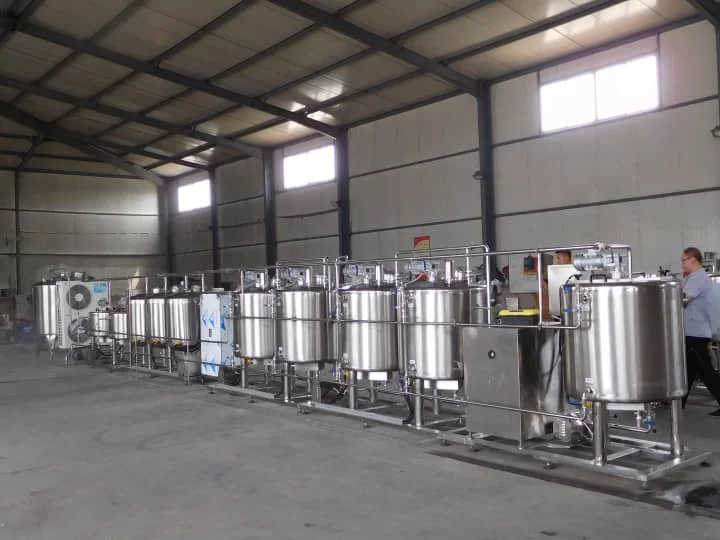
Greek yogurt has become one of the fastest-growing segments in the global dairy market, with annual growth rates exceeding 8% in many regions. Its thick, creamy texture and high protein content have made it a premium product that commands 40-60% higher prices than regular yogurt. This comprehensive guide covers everything you need to know about Greek yogurt production, from the straining process to equipment selection and investment planning.
What Makes Greek Yogurt Different?
Greek yogurt differs from regular yogurt primarily through its straining process, which removes whey and concentrates the solids:
CharacteristicRegular YogurtGreek YogurtDifferenceProtein Content3-5g per 100g8-12g per 100g2-3x higherSugar Content10-15g per 100g4-6g per 100g50-60% lowerFat Content2-4g per 100g5-10g per 100g2-3x higherTextureSmooth, pourableThick, creamyStrainedYield100% of milk30-40% of milk60-70% whey removedSelling Price$1.50-2.50/L$3.00-5.00/L40-60% premium
The Straining Process Explained
Greek yogurt production requires an additional straining step after fermentation:
-
Standard Fermentation: Follow regular yogurt production process
-
Straining: Remove whey through filtration or centrifugation
-
Concentration: Achieve 2-3x solids concentration
-
Packaging: Fill thick yogurt into containers
Greek Yogurt Production Process
Complete Production Workflow
StageProcessTemperatureDurationKey Equipment1. Milk ReceptionQuality testing and cooling4°C30 minReception tank2. StandardizationAdjust fat/protein content40-50°C20 minStandardization tank3. HomogenizationBreak down fat globules60-70°C10 minHomogenizer (200 bar)4. PasteurizationHeat treatment90-95°C10 minPasteurizer5. CoolingReduce to fermentation temp42-45°C20 minPlate cooler6. InoculationAdd culture42-45°C10 minFermentation tank7. FermentationCulture incubation42-45°C5-7 hoursFermentation tank8. CoolingStop fermentation4-6°C30 minCooling system9. StrainingRemove whey4-6°C2-4 hoursStraining system10. PackagingFill and seal4-6°CContinuousFilling machine
Key Differences from Regular Yogurt Production
AspectRegular YogurtGreek YogurtImpactMilk Requirement1L milk = 1L yogurt3-4L milk = 1L yogurtHigher raw material costFermentation Time6-8 hours5-7 hoursSlightly shorterAdditional StepNoneStraining (2-4 hours)Extra equipment neededYield95-100%30-40%Lower output per batchShelf Life14-21 days21-28 daysLonger due to lower moisture
Equipment Required for Greek Yogurt Production
Core Equipment List
EquipmentFunctionSpecificationsEstimated CostMilk Reception TankRaw milk storage500-2000L, SUS 304$5,000-12,000Standardization TankAdjust milk composition500-2000L, with agitator$6,000-15,000HomogenizerFat globule reduction200 bar pressure$7,000-15,000PasteurizerHeat treatment90-95°C, 10 min$9,000-20,000Fermentation TankCulture incubationTemperature controlled$10,000-25,000Straining SystemWhey removalCentrifugal or membrane$15,000-50,000Whey Collection TankCollect strained whey1000-3000L$3,000-8,000Filling MachinePackage thick yogurt500-2000 cups/hr$7,000-20,000CIP Cleaning SystemAutomated cleaningMatch line$5,000-12,000
Straining System Options
The straining system is the key differentiator for Greek yogurt production:
MethodDescriptionCapacityCostBest ForCentrifugal SeparatorHigh-speed rotation separates whey500-2000L/hr$15,000-30,000Medium-large productionMembrane FiltrationUltrafiltration membranes200-1000L/hr$20,000-50,000Premium quality, consistentCloth Bag StrainingTraditional gravity straining50-200L/hr$2,000-5,000Small-scale, artisanalDecanter CentrifugeContinuous separation1000-5000L/hr$30,000-80,000Industrial production
Straining Method Comparison
FactorCentrifugalMembraneCloth BagDecanterYield35-40%30-35%25-30%35-45%Processing Time1-2 hours2-4 hours8-12 hoursContinuousProtein Retention90-95%95-98%85-90%90-95%Labor Required1 person1 person2-3 persons1 personMaintenance CostMediumHighLowMediumProduct QualityExcellentPremiumGoodExcellent
Investment Cost for Greek Yogurt Production
Small Scale (200L Daily Output)
EquipmentCost Range (USD)NotesMilk Reception Tank (600L)$5,000-8,0003x milk volume neededStandardization Tank$6,000-10,000For fat/protein adjustmentPasteurizer (600L)$9,000-14,000Higher temp for Greek styleHomogenizer$7,000-10,000200 bar pressureFermentation Tank (600L)$10,000-15,000Temperature controlledCentrifugal Strainer$15,000-25,000Key equipmentWhey Collection Tank$3,000-5,000For byproductFilling Machine$7,000-12,000For thick yogurtCIP System$5,000-8,000Complete cleaningTotal Equipment$67,000-107,000Facility Setup$20,000-40,000Renovation, utilitiesWorking Capital (3 months)$25,000-40,000Operating expensesTotal Investment$112,000-187,000
Medium Scale (500L Daily Output)
EquipmentCost Range (USD)NotesMilk Reception Tank (1500L)$8,000-12,0003x milk volume neededStandardization Tank$10,000-15,000For fat/protein adjustmentPasteurizer (1500L)$14,000-20,000Higher temp for Greek styleHomogenizer$10,000-15,000200 bar pressureFermentation Tank (1500L)$15,000-25,000Temperature controlledMembrane Filtration System$20,000-40,000Premium qualityWhey Collection Tank$5,000-8,000For byproductFilling Machine$12,000-20,000For thick yogurtCIP System$8,000-12,000Complete cleaningTotal Equipment$92,000-167,000Facility Setup$40,000-80,000Renovation, utilitiesWorking Capital (3 months)$40,000-60,000Operating expensesTotal Investment$172,000-307,000
Greek Yogurt vs Regular Yogurt: Profitability Comparison
MetricRegular YogurtGreek YogurtDifferenceRaw Milk Required1L per 1L product3-4L per 1L product3-4x moreProduction Cost$0.60-0.90/L$1.20-1.80/L2x higherSelling Price$1.50-2.50/L$3.00-5.00/L2x higherGross Margin55-65%55-65%SimilarDaily Revenue (500L)$750-1,250$1,500-2,5002x higherMonthly Net Profit$8,000-12,000$15,000-25,0002x higherPayback Period12-18 months14-20 monthsSlightly longer
Whey Byproduct Revenue
The straining process produces significant whey that can be monetized:
Whey ProductMarket ValueProcessing RequiredRevenue PotentialLiquid Whey$0.10-0.20/LMinimal$50-100/day (500L line)Whey Protein Concentrate$5-10/kgDrying, filtration$200-500/dayWhey Powder$2-4/kgSpray drying$100-300/dayAnimal Feed$0.05-0.10/LMinimal$25-50/day
Quality Control for Greek Yogurt
Key Quality Parameters
ParameterStandardTesting MethodFrequencyProtein Content8-12g per 100gKjeldahl methodEvery batchFat Content5-10g per 100gGerber methodEvery batchpH4.3-4.6pH meterEvery batchViscosity8000-15000 cPViscometerEvery batchTotal Solids15-20%Oven dryingEvery batchMicrobial CountPlate countDaily
Common Quality Issues and Solutions
IssueCauseSolutionToo ThinInsufficient strainingExtend straining time, check membraneToo SourOver-fermentationReduce fermentation time, cool fasterGrainy TextureOver-homogenizationReduce pressure to 150-200 barWhey SeparationPoor stabilizationAdd stabilizers (pectin, gelatin)Off-FlavorsContaminationImprove sanitation, check culture
Market Opportunities for Greek Yogurt
Growing Market Segments
SegmentGrowth RatePrice PremiumKey DriversPlain Greek Yogurt6-8% annually40-50%Health consciousnessFlavored Greek Yogurt8-10% annually50-60%Taste varietyGreek Yogurt Drinks10-12% annually60-80%ConvenienceOrganic Greek Yogurt12-15% annually80-100%Premium positioningHigh-Protein Greek Yogurt15-18% annually100-120%Fitness market
Target Consumer Profiles
Consumer TypeKey NeedsPreferred ProductsPrice SensitivityHealth ConsciousHigh protein, low sugarPlain, organicLowFitness EnthusiastsProtein content, macrosHigh-protein, flavoredLow-MediumFamiliesTaste, valueFlavored, large packsMediumPremium BuyersQuality, brandOrganic, artisanalLow
Conclusion
Greek yogurt production offers excellent profit potential with 55-65% gross margins and strong market demand. The key investment is the straining system ($15,000-80,000), which differentiates Greek yogurt from regular yogurt production. With proper equipment selection and quality control, a 500L daily Greek yogurt line can generate $15,000-25,000 monthly net profit.
Contact Shuliy Machinery for customized Greek yogurt production line solutions. Our dairy processing experts will help you design the perfect equipment configuration based on your target capacity, product specifications, and budget.
What is the difference between Greek yogurt and regular yogurt?Greek yogurt is strained to remove whey, resulting in 2-3x higher protein content (8-12g vs 3-5g per 100g), 50-60% lower sugar, and a thick, creamy texture. It requires 3-4 liters of milk to produce 1 liter of Greek yogurt, compared to 1:1 for regular yogurt.How much does Greek yogurt production equipment cost?Greek yogurt production equipment costs $67,000-167,000 depending on capacity. The key additional cost is the straining system ($15,000-80,000), which is not needed for regular yogurt production. Total investment including facility and working capital ranges from $112,000-307,000.Is Greek yogurt production profitable?Yes, Greek yogurt production is highly profitable with 55-65% gross margins. A 500L daily line can generate $15,000-25,000 monthly net profit, with payback periods of 14-20 months. The premium pricing (40-60% higher than regular yogurt) offsets the higher raw material costs.What equipment is needed for Greek yogurt production?
Essential equipment includes milk reception tanks, standardization tanks, homogenizers, pasteurizers, fermentation tanks, straining systems (centrifugal or membrane), whey collection tanks, filling machines, and CIP cleaning systems. The straining system is the key differentiator from regular yogurt production.