How to Operate the Small Yogurt Production Line: Complete Step-by-Step Guide
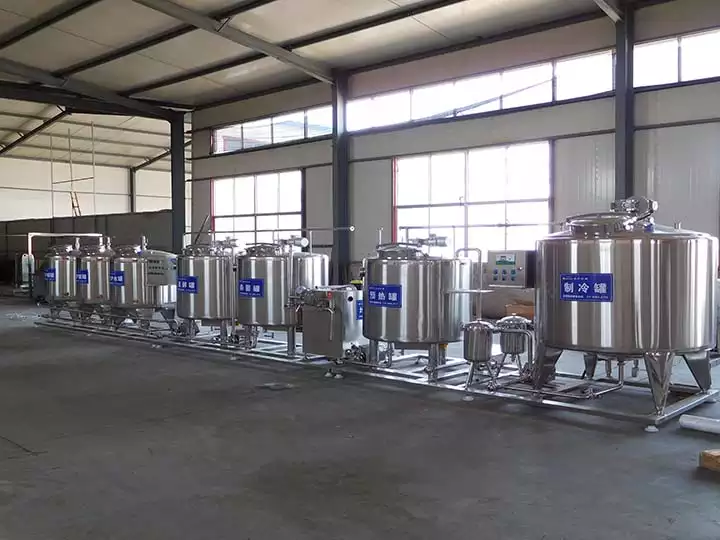
Before operating a small yogurt production line, make sure you are familiar with and understand the equipment’s operating manual and safety procedures. This comprehensive step-by-step guide covers the complete operation process, from raw milk reception to finished product packaging, with detailed parameters and safety precautions.
Basic Process of the Small Yogurt Production Line
The basic production process of yogurt follows this sequence:
Raw Milk Storage → Filtration → Preheating → Homogenization → Pasteurization → Cooling → Inoculation → Fermentation → Filling → Cold Storage
Each stage requires specific temperature control, timing, and equipment operation to ensure consistent product quality.
Small Yogurt Production Line Equipment List
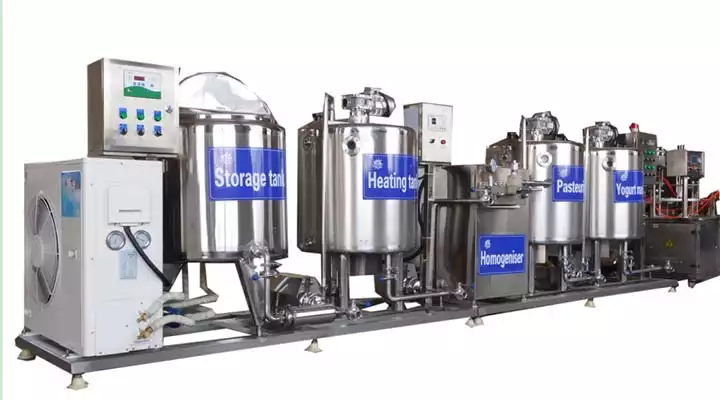
A complete small yogurt production line (200-500L daily capacity) includes the following equipment:
EquipmentFunctionCapacityKey ParametersRaw Milk Cooling TankStorage and cooling200-500LMaintain 4°CSingle/Duplex FilterRemove impurities100 meshFlow rate: 500-1000L/hrMilk PumpTransfer milk between stages1-3 m³/hrFood-grade stainless steelPreheating TankWarm milk to processing temp200-500L40-50°C, 20 minHomogenizerBreak down fat globules300L/hr150-250 bar, 60-70°CPasteurization TankHeat treatment for safety200-500L85°C, 30 minFermentation TankCulture incubation200-500L42°C, 6-8 hoursFilling MachinePackage yogurt500-1000 cups/hrAutomatic or semi-autoCIP Cleaning SystemAutomated cleaningMatch line80-90°C, chemical dosing
Step-by-Step Yogurt Processing Operation
Step 1: Raw Milk Reception and Storage
Objective: Receive and store fresh milk at proper temperature
Operation Procedure:
-
Quality Testing: Test incoming milk for temperature (<10°C), acidity (pH 6.6-6.8), and antibiotic residues
-
Transfer to Tank: Use stainless steel milk pump to transfer raw milk to cooling tank
-
Cool to 4°C: Activate cooling system to maintain milk at 4°C until processing
-
Record Data: Log milk volume, temperature, supplier, and test results
Key Parameters:
ParameterStandardAction if Out of RangeTemperatureReject if >10°CStorage Temperature4°CAdjust cooling systempH6.6-6.8Test for spoilageAntibiotic TestNegativeReject milk if positive
Step 2: Filtration
Objective: Remove impurities and foreign materials from raw milk
Operation Procedure:
-
Prepare Filter: Install clean 100-mesh filter element
-
Start Pump: Turn on milk pump at low speed
-
Monitor Flow: Ensure steady flow through filter
-
Check Filter: Inspect filter element after each batch
-
Clean/Replace: Clean or replace filter if clogged
Key Parameters:
ParameterStandardFilter Mesh Size100 mesh (150 μm)Flow Rate500-1000L/hrFilter CleaningAfter each batchFilter ReplacementWeekly or when damaged
Step 3: Preheating
Objective: Warm milk to optimal temperature for homogenization
Operation Procedure:
-
Transfer Milk: Pump filtered milk to preheating tank
-
Set Temperature: Adjust heating system to 40-50°C
-
Hold Time: Maintain temperature for 20 minutes
-
Monitor: Check temperature every 5 minutes
-
Prepare for Next Stage: Ensure homogenizer is ready
Key Parameters:
ParameterStandardNotesTemperature40-50°COptimal for homogenizationHolding Time20 minEnsure even heatingAgitationContinuousPrevent hot spots
Step 4: Homogenization
Objective: Break down fat globules for smooth, uniform texture
Operation Procedure:
-
Preheat Homogenizer: Ensure milk temperature is 60-70°C
-
Set Pressure: Adjust homogenization pressure to 150-250 bar
-
Start Machine: Turn on homogenizer at low speed
-
Monitor: Check pressure gauge and milk temperature
-
Process Batch: Run entire batch through homogenizer (approximately 1 hour for 300L)
-
Clean: Flush system with warm water after use
Key Parameters:
ParameterStandardImpactTemperature60-70°CLower temp reduces efficiencyPressure150-250 barHigher pressure = finer textureProcessing Time~1 hour for 300LDepends on capacity

Step 5: Pasteurization (Sterilization)
Objective: Eliminate pathogenic bacteria while preserving beneficial properties
Operation Procedure:
-
Transfer Milk: Pump homogenized milk to pasteurization tank
-
Heat to 85°C: Activate heating system (350# heat-conducting oil or hot water)
-
Hold Temperature: Maintain 85°C for 30 minutes
-
Monitor: Check temperature every 5 minutes
-
Record: Log time, temperature, and batch number
-
Prepare for Cooling: Ensure cooling system is ready
Key Parameters:
ParameterStandardNotesTemperature85°CStandard pasteurizationHolding Time30 minFor 300L batchLarge Batch (>300L)40-60 minAdjust time accordinglyHeat SourceHot water or thermal oilDepends on equipment
Step 6: Cooling and Inoculation
Objective: Cool milk to fermentation temperature and add starter culture
Operation Procedure:
-
Activate Cooling: Use cold water for pre-cooling (0.3-0.5 hours)
-
Cool to 45°C: Monitor temperature until it reaches 42-45°C
-
Prepare Culture: Measure starter culture (2-3% of milk volume)
-
Add Culture: Sprinkle culture evenly over milk surface
-
Gentle Mixing: Agitate slowly for 5-10 minutes to distribute culture
-
Seal Tank: Close fermentation tank to prevent contamination
Key Parameters:
ParameterStandardNotesCooling Time0.3-0.5 hoursUse cold waterTarget Temperature42-45°COptimal for cultureCulture Dosage2-3% of milk volumeFollow manufacturer instructionsMixing Time5-10 minGentle agitation
Step 7: Fermentation
Objective: Allow culture to convert lactose to lactic acid
Operation Procedure:
-
Set Temperature: Maintain fermentation tank at 42°C
-
Monitor pH: Check pH every hour (target: 4.5-4.6)
-
Check Consistency: Observe yogurt texture after 4 hours
-
End Fermentation: Stop when pH reaches 4.5-4.6 (typically 6-8 hours)
-
Cool Immediately: Reduce temperature to 4-6°C to stop fermentation
-
Transfer to Filling: Move fermented yogurt to filling machine
Key Parameters:
ParameterStandardNotesTemperature42°CMaintain ±0.5°CFermentation Time6-8 hoursDepends on culture activityTarget pH4.5-4.6Stop fermentation at this pointCooling Temperature4-6°CPrevent over-fermentation
Step 8: Filling and Packaging
Objective: Package yogurt into containers for distribution
Operation Procedure:
-
Prepare Filling Machine: Clean and sanitize all contact surfaces
-
Set Fill Volume: Adjust filling machine to target volume (e.g., 200g per cup)
-
Load Containers: Place empty cups/bottles on conveyor
-
Start Filling: Activate filling machine
-
Seal: Apply lids or foil seals immediately after filling
-
Label: Apply product labels with date and batch number
-
Cold Storage: Transfer filled products to cold room (2-6°C)
Key Parameters:
ParameterStandardNotesFill VolumePer product spec±2% accuracyFilling Temperature4-6°CMaintain cold chainSealing Temperature150-180°CFor heat sealingStorage Temperature2-6°CUntil distribution
Safety Precautions
Personal Safety
PrecautionRequirementProtective ClothingWear clean uniform, hairnet, glovesHand WashingWash hands before handling equipmentFootwearUse sanitized, non-slip footwearHealth CheckNo open wounds or illness
Equipment Safety
PrecautionRequirementLockout/TagoutDisconnect power before maintenanceHot SurfacesAllow equipment to cool before handlingChemical HandlingWear gloves when handling cleaning chemicalsElectrical SafetyKeep water away from electrical panels
Food Safety
PrecautionRequirementTemperature ControlMonitor and record all temperaturesCleaning ScheduleFollow CIP protocol after each batchCross-ContaminationSeparate raw and processed areasRecord KeepingDocument all production parameters
Daily Operation Checklist
TaskFrequencyTimeEquipment inspectionBefore start15 minCIP cleaningAfter each batch30-60 minTemperature verificationEvery 2 hours5 minpH testingDuring fermentationEvery hourQuality checkAfter filling10 minEnd-of-day cleaningEnd of shift60 min
Conclusion
Operating a small yogurt production line requires attention to detail, proper temperature control, and strict hygiene practices. By following this step-by-step guide, you can consistently produce high-quality yogurt while maintaining food safety standards. Regular training, documentation, and preventive maintenance are key to long-term operational success.
Contact Shuliy Machinery for comprehensive operator training programs and technical support for your yogurt production line.
What is the basic process of yogurt production?The basic process includes: raw milk storage → filtration → preheating → homogenization → pasteurization → cooling → inoculation → fermentation → filling → cold storage. Each stage requires specific temperature control and timing.How long does it take to make yogurt in a small production line?A complete production cycle takes approximately 10-14 hours, including 30 minutes for pasteurization, 6-8 hours for fermentation, and 1-2 hours for filling and packaging.What temperature is needed for yogurt fermentation?Yogurt fermentation requires a temperature of 42°C (±0.5°C). The fermentation process typically takes 6-8 hours until the pH reaches 4.5-4.6.How do I clean a yogurt production line?
Use CIP (Clean-in-Place) systems with a standard cleaning cycle: pre-rinse with warm water, caustic wash at 70-80°C, acid wash, and final sanitization. Clean after each production batch.