Yogurt Equipment Maintenance Guide: Best Practices for Long-Term Performance
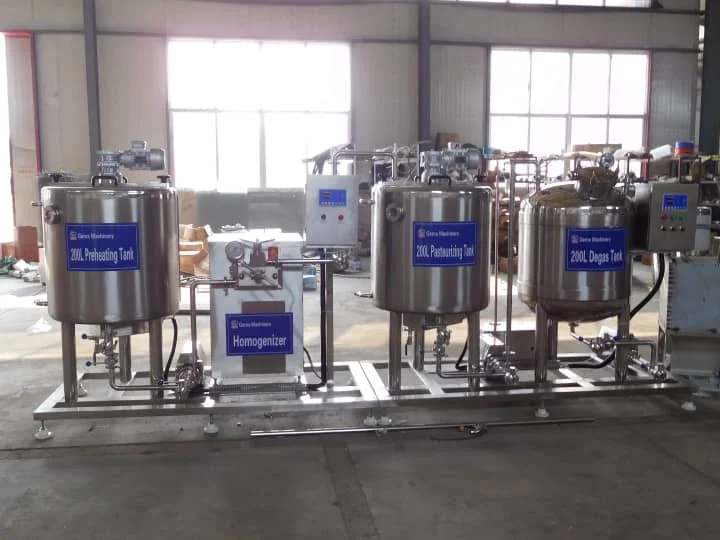
Why Yogurt Equipment Maintenance Matters
Proper yogurt machine maintenance is critical for ensuring consistent product quality, preventing costly breakdowns, and extending equipment lifespan. Well-maintained equipment not only delivers superior yogurt products but also reduces downtime and operational costs. Regular maintenance prevents contamination, maintains consistent performance, and ensures compliance with food safety standards.
Without proper maintenance, yogurt production equipment faces common issues like bacterial growth, mechanical wear, and reduced efficiency. This guide covers comprehensive maintenance practices for all major equipment in your yogurt production line, from pasteurization to packaging.
Overview of Yogurt Production Equipment
A complete yogurt production line consists of several interconnected pieces of equipment, each requiring specific maintenance protocols:
-
Milk Pasteurizer: Ensures milk safety through heat treatment
-
Yogurt Fermentation Maker: Controls fermentation temperature and timing
-
Dairy Homogenization Machine: Refines milk particles for uniform texture
-
Yogurt Duplex Filter: Removes impurities from milk
-
Yogurt CIP Cleaning System: Automates equipment cleaning
-
Automatic Yogurt Filling Machine: Packages yogurt into containers
-
Yogurt Production Line: Integrates all equipment for seamless operation
-
Cow Milking Machine: Collects raw milk for processing
Each piece of equipment has unique maintenance requirements based on its function, materials, and exposure to dairy products.
Daily Cleaning Procedures
Daily cleaning is the foundation of effective yogurt machine maintenance. These procedures should be performed after each production run to prevent bacterial growth and product residue buildup.
Cleaning Steps for All Equipment
-
Rinse with Warm Water: Remove loose product residue with 40-50°C water
-
Apply Detergent Solution: Use food-grade alkaline detergent (pH 11-12) at 60-70°C
-
Scrub Contact Surfaces: Use soft brushes for hard-to-reach areas
-
Rinse Thoroughly: Remove all detergent with clean water
-
Sanitize Surfaces: Apply approved sanitizer (iodine-based or quaternary ammonium)
-
Final Rinse: Remove sanitizer residue with potable water
-
Drain and Dry: Ensure all equipment is completely drained
For equipment with CIP systems, follow the automated cleaning cycle protocol. Monitor cleaning temperatures and chemical concentrations to ensure effectiveness.
Daily Cleaning Checklist
TaskEquipmentMethodTime RequiredPre-rinseAll tanks, pipesWarm water 40-50°C15-20 minCaustic washProcessing equipment2% NaOH at 70-80°C20-30 minIntermediate rinseAll equipmentClean water10-15 minAcid washHeat exchangers1% HNO3 at 60-70°C15-20 minFinal rinseAll equipmentPotable water10-15 minSanitizationProduct contact surfacesApproved sanitizer10 min
Weekly Inspection Checklist
Weekly inspections help identify potential issues before they become major problems. Use this comprehensive checklist to maintain optimal equipment condition.
EquipmentInspection ItemStandardAction RequiredMilk PasteurizerGaskets and sealsNo cracks or deformationReplace if damagedYogurt Fermentation MakerTemperature sensors±0.5°C accuracyCalibrate if drift detectedHomogenizerOil levelsBetween min/max marksAdd oil to correct levelFilterFilter elementsNo clogging or damageClean or replace as neededFilling MachineSealing mechanismsNo wear or misalignmentAdjust or replace sealsCIP SystemPumps and valvesNo leaks or unusual noiseService if necessary
Document all weekly inspections with dates, findings, and corrective actions taken. This record helps track equipment condition trends and maintenance effectiveness.
Monthly Maintenance Tasks
Monthly maintenance goes beyond daily cleaning to address mechanical components and system performance. These tasks ensure long-term reliability.
Mechanical Components
-
Lubrication: Apply food-grade lubricants to bearings and moving parts
-
Belt Inspection: Check tension and alignment, replace worn belts
-
Motor Maintenance: Inspect electrical connections and motor housing
-
Gearbox Oil: Check levels and change according to manufacturer schedule
-
Vibration Analysis: Monitor for unusual vibration patterns
Performance Verification
-
Temperature Calibration: Verify sensor accuracy across operating range
-
Pressure Testing: Check for leaks in high-pressure systems
-
Flow Rate Verification: Confirm throughput meets specifications
-
Seal Integrity: Test seals under operating conditions
-
Cleaning Effectiveness: Verify CIP cleaning achieves required standards
Quarterly and Annual Maintenance
Extended maintenance periods focus on comprehensive system overhauls and component replacements. These activities typically require planned downtime.
Quarterly Tasks
TaskEquipmentDurationNotesComplete disassemblyAll tanks, pumps4-8 hoursInspect internal componentsComponent replacementGaskets, seals, wear parts2-4 hoursReplace per scheduleElectrical inspectionControl panels, wiring2-3 hoursCheck connections, insulationSoftware updatesPLC, HMI systems1-2 hoursBackup before updatingPerformance testingAll systems4-6 hoursFull system validation
Annual Overhaul
TaskEquipmentDurationNotesMajor component replacementPumps, motors, critical parts1-3 daysPlan production scheduleSystem upgradesEfficiency improvements1-2 daysEvaluate ROI before upgradeComprehensive inspectionFull system evaluation1-2 daysDocument all findingsTraining updateOperator refresh1 dayReview procedures, safetySchedule reviewMaintenance program2-4 hoursAdjust based on data
Common Wear Parts and Replacement Schedule
Knowing when to replace common wear parts prevents unexpected failures and maintains consistent product quality. Follow this replacement schedule based on operating hours.
ComponentReplacement IntervalIndicators for ReplacementEstimated CostSeals and GasketsEvery 6 months or 2000 hoursCracking, hardening, leakage$50-200 per setFiltersMonthly to quarterlyIncreased pressure drop, reduced flow$100-500 per setBearingsAnnually or 4000 hoursUnusual noise, vibration, heat$100-500 eachBeltsEvery 6-12 monthsCracks, fraying, slipping$50-200 eachO-ringsEvery 3-6 monthsCompression set, cracking$10-50 per setValve SeatsAnnually or 3000 hoursLeakage, erosion$100-300 eachTemperature SensorsEvery 2 yearsCalibration drift, slow response$200-500 eachHeating ElementsEvery 3-5 yearsReduced heating efficiency$500-2000 each
Maintain inventory of critical spare parts to minimize downtime during emergency repairs. Consider bulk purchasing for cost savings.
Recommended Spare Parts Inventory
Part CategoryMinimum StockEstimated InvestmentSeals and gaskets2 sets per equipment type$500-1,500Temperature sensors2-3 units$400-1,500Filter elements5-10 units$200-1,000O-rings (assorted)50-100 pieces$100-300Belts (assorted)2-3 sets$200-600Total Spare Parts Investment$1,400-4,900
Maintenance Record Keeping
Effective yogurt machine maintenance requires comprehensive record keeping. Document all maintenance activities to track performance trends and optimize schedules.
Essential Records
-
Maintenance Log: Date, activity, operator, findings
-
Parts Replacement: Component, serial number, date installed
-
Performance Data: Temperatures, pressures, flow rates
-
Failure Analysis: Root cause, corrective action
-
Cost Tracking: Labor, parts, downtime expenses
Modern equipment often includes digital logging capabilities that automatically track performance parameters and maintenance schedules.
Maintenance Cost Estimation
Understanding maintenance costs helps with budget planning and operational efficiency analysis.
Annual Maintenance Cost by Equipment Type
EquipmentAnnual Maintenance CostPercentage of Equipment ValueMilk Pasteurizer$2,000-5,0003-5%Fermentation Tank$1,500-3,5002-4%Homogenizer$2,500-6,0004-6%Filling Machine$3,000-7,0004-7%CIP System$1,500-3,0003-5%Total (500L line)$10,500-24,5003-5% of total investment
Cost-Saving Maintenance Strategies
StrategyAnnual SavingsImplementation CostPreventive maintenance program20-30% reduction in repairs$2,000-5,000 setupStaff training15-25% fewer operator errors$1,000-3,000Spare parts inventory40-60% less downtime$1,400-4,900 initialPredictive monitoring25-35% fewer failures$3,000-8,000 system
Safety Considerations During Maintenance
Safety should always be the top priority during maintenance activities. Follow these guidelines to protect personnel and equipment.
-
Lockout/Tagout: Disconnect power sources before maintenance
-
Personal Protective Equipment: Wear appropriate safety gear
-
Chemical Safety: Handle detergents and sanitizers properly
-
Hot Surface Protection: Allow equipment to cool before handling
-
Electrical Safety: Use proper tools and procedures
Train all maintenance personnel on safety procedures and emergency response protocols.
Troubleshooting Common Maintenance Issues
Quickly identifying and resolving maintenance issues minimizes downtime and production losses.
ProblemPossible CauseSolutionExcessive vibrationLoose mounting, worn bearingsTighten bolts, replace bearingsPoor cleaning resultsLow temperature, insufficient detergentVerify CIP parametersSeal leakageOver-compression, wrong materialInstall correct sealsTemperature driftDirty sensors, calibration driftClean, recalibrate
Refer to equipment manuals for specific troubleshooting procedures and contact manufacturers for complex issues.
Conclusion and Best Practices
Implementing a comprehensive yogurt machine maintenance program ensures consistent product quality, maximizes equipment lifespan, and minimizes unexpected downtime. The key to success lies in establishing regular schedules, documenting all activities, and investing in proper training for maintenance personnel.
Remember that maintenance is an investment in your production capability and product quality. Regular attention to equipment care pays dividends in reduced operating costs and improved reliability. For optimal results, consider partnering with experienced equipment manufacturers who can provide ongoing support and training.
For complete yogurt production solutions and expert maintenance support, explore our range of equipment:
-
Yogurt Production Line - Integrated solutions with comprehensive maintenance support
-
Milk Pasteurizer Machine - Advanced systems with simplified maintenance protocols
-
Yogurt Fermentation Maker - Precision equipment with predictive maintenance features
-
Automatic Yogurt Filling Machine - Hygienic design for easy cleaning and maintenance
-
Yogurt CIP Cleaning System - Automated cleaning solutions to simplify maintenance routines
How often should I clean my yogurt production equipment?Clean all product contact surfaces after each production run using CIP (Clean-in-Place) systems or manual cleaning procedures. Daily cleaning includes pre-rinse, caustic wash, acid wash, and sanitization. Weekly inspections and monthly deep cleaning ensure optimal hygiene.What is the annual maintenance cost for yogurt equipment?Annual maintenance costs typically range from 3-5% of total equipment value. For a 500L production line, expect $10,500-24,500 annually, including parts, labor, and preventive maintenance activities.What spare parts should I keep in stock?Essential spare parts include seals and gaskets (2 sets per equipment), temperature sensors (2-3 units), filter elements (5-10 units), O-rings (50-100 pieces), and belts (2-3 sets). Total spare parts investment ranges from $1,400-4,900.How can I reduce yogurt equipment maintenance costs?
Implement a preventive maintenance program (saves 20-30% on repairs), train staff properly (reduces operator errors by 15-25%), maintain spare parts inventory (reduces downtime by 40-60%), and use predictive monitoring systems (prevents 25-35% of failures).