Yogurt Duplex Filter | Milk Filter
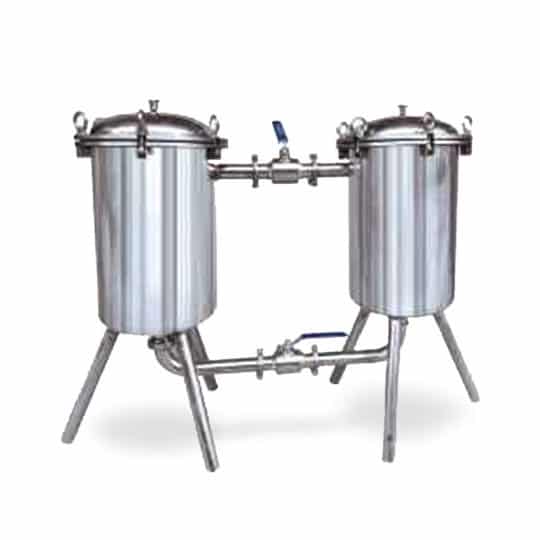
The milk filter (duplex filter) is positioned between the raw milk reception tank and the pasteurizer in a yogurt production line. It removes physical contaminants—animal hair, feed particles, dust, bedding materials—from raw milk before further processing. Shuliy has manufactured and installed over 200 duplex filter units across dairy facilities in Southeast Asia, the Middle East, and Africa.
Dual-Filter Design: Continuous operation | SUS 304 Construction | 100-400 Mesh | 0.3 MPa Rated | Easy Maintenance
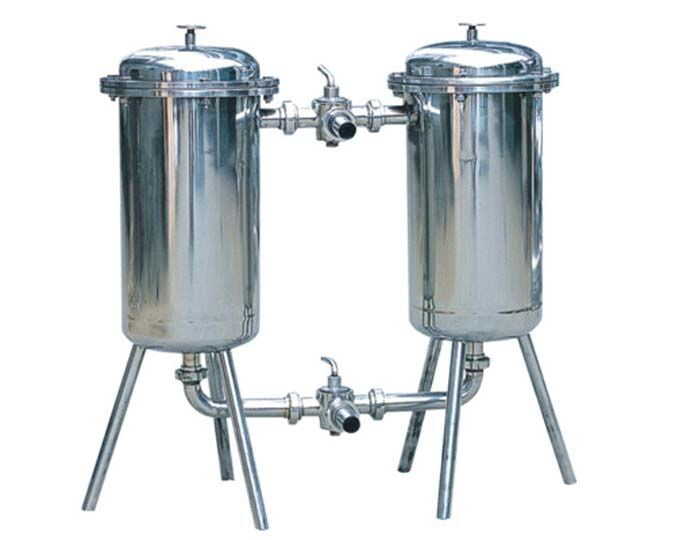
Duplex Filter vs Single Filter
The duplex filter consists of two parallel filtration cylinders connected by three-way ball valves at the inlet and outlet. When one cylinder requires cleaning, the operator switches the valves to the second cylinder without interrupting production.
A side-by-side comparison at a 500L/day yogurt facility in Riyadh showed the single filter required 6 filter changes per day at 15 minutes each—90 minutes of total downtime. The duplex filter required two valve switches totaling approximately 5 minutes. Over a 30-day period, this recovered 42.5 hours of production time.
Selection Guide
FactorSingle FilterDuplex FilterDaily productionUnder 500L500L and aboveBudget$400-800$800-2,500Downtime toleranceCan stop every 2-3 hoursContinuous operation requiredLabor availabilityDedicated operatorMinimal staffing
For operations running more than one batch per day, the duplex configuration is recommended.
Operating Principle
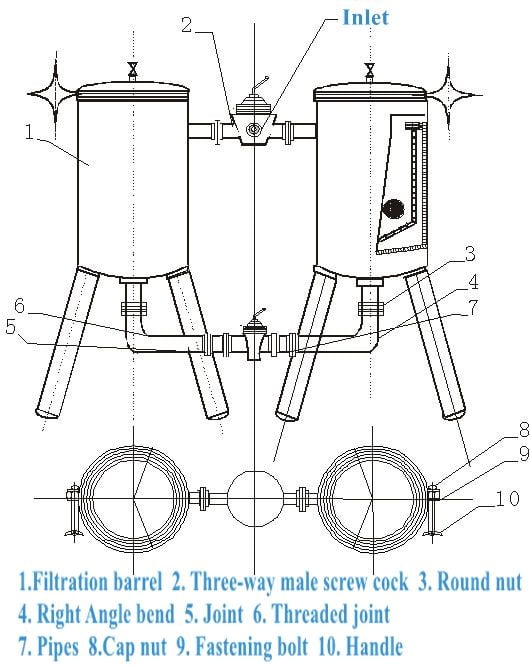
Raw milk enters through the inlet three-way ball valve, distributes between the two cylinders, passes through the mesh screens, and exits as filtered milk through the outlet valve. Each cylinder is equipped with a top-mounted air release valve.
During startup, trapped air reduces effective filtration area by 15-20%. Open the air release valves for 10-15 seconds until liquid begins to seep through, then close.
Operating Sequence
StepActionTimeNotes1Open inlet valve to Cylinder A-Both cylinders clean2Open outlet valve from Cylinder A-Air release valves closed3Open air release valves briefly10-15 secBleed trapped air4Monitor pressure differentialContinuousNormal: 0.05-0.1 MPa5Switch to Cylinder B when pressure rises30 secTurn both valves simultaneously6Clean Cylinder A10-15 minRemove, rinse, reinstall
The pressure differential between inlet and outlet serves as the primary indicator for cylinder switching. When inlet pressure is 0.2 MPa and outlet drops to 0.12 MPa or below, switch to the clean cylinder.
Filter Mesh Selection
Mesh size determines both the particle size captured and the flow rate through the filter.
Mesh SizeParticle Size CapturedFlow RateBest Application100 mesh150 microns100%Pre-filtration for very dirty milk200 mesh75 microns85%Standard raw milk filtration300 mesh50 microns70%Premium yogurt, fine clarification400 mesh37 microns55%Specialty products, lab-grade
For standard yogurt production, 200 mesh provides adequate filtration of hair, feed particles, and visible sediment while maintaining acceptable flow rates. Raw milk quality from small farms without pre-filtering may require 100 mesh as a first pass. Premium Greek yogurt production benefits from 300 mesh, though cleaning frequency increases from 3-4 hours to 1.5-2 hours between changes.
A 2000L/day facility in Lagos initially specified 400 mesh. Filter changes were required every 45 minutes. Switching to 200 mesh reduced daily filter changes from 16 to 5 with no perceptible change in final product quality.
Technical Specifications
ParameterSpecificationFilter TypeSingle or Duplex (Double)MaterialFood-grade stainless steel (SUS 304)Surface FinishPolished inner and outer surfaces, Ra ≤ 0.8μmDesign Pressure0.3 MPaWorking Pressure0.1-0.25 MPaConnection TypeExpansion/contraction fittings, clamp connectionsValve TypeThree-way ball valves (SUS 304)Filter Mesh Range100-400 mesh (customizable)Air ReleaseTop-mounted manual valvesInlet/OutletSanitary fittings (DN25-DN50)Operating Temperature0-100°C
Capacity by Model
ModelConfigurationCapacity (L/hr)Inlet/OutletWeightSL-MF-1Single500-1000DN2518 kgSL-MF-2Duplex1000-3000DN3235 kgSL-MF-3Duplex3000-5000DN4052 kgSL-MF-4Duplex5000-8000DN5078 kg
Installation Requirements
Mounting height. Position the filter outlet at least 0.5 meters above the inlet of downstream equipment (typically the pasteurizer). This gravity assist reduces transfer pump load.
Bypass piping. Install a bypass line with a manual valve around the duplex filter. During deep maintenance—gasket replacement, welded seam inspection—the bypass allows continued production.
Drain positioning. The drain outlet should be at the lowest point of the installation with a floor drain directly beneath. Cleaning flushes 20-30 liters of water and debris through this outlet.
Cleaning and Maintenance
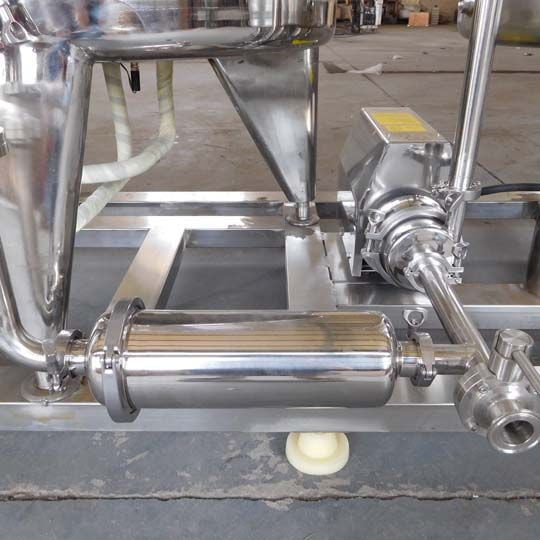
After each production run, close inlet and outlet valves, open the drain, and flush each cylinder with warm water (40-50°C) for 2-3 minutes. Remove the mesh screen and rinse under running water. Stubborn residue requires soaking in 2% NaOH solution for 15 minutes followed by thorough rinsing.
Weekly maintenance includes complete disassembly—mesh screens, gaskets, and air release valves. Inspect screens for tears or stretched mesh. A 2-3mm hole allows contaminants through and compromises filtration.
Maintenance Schedule
FrequencyTaskTime RequiredAfter each batchFlush with warm water, rinse mesh10 minWeeklyDeep clean, inspect screens and gaskets30 minMonthlyCheck welded seams, test valve operation20 minEvery 500-1000 hoursReplace mesh screens15 min
Troubleshooting
ProblemCauseFixFlow rate drops 30%+Mesh cloggedClean or replace screenPressure differential > 0.15 MPaDirty filter elementSwitch to clean cylinder, clean clogged oneLeaking at cylinder baseWorn gasketReplace gasket (standard size, $5-10)Air in filtered milk outletAir release valve stuck openClean valve seat, replace if damagedMilk bypassing filterDamaged mesh or improper seatingReplace screen, ensure proper seatingValve hard to turnMilk residue buildupDisassemble valve, clean with warm water
Applications Beyond Dairy
The duplex filter design is suitable for any liquid requiring particulate removal. Shuliy has installed these units in juice plants in Kenya, breweries in Tanzania, and sauce factories in Vietnam.
IndustryApplicationsTypical MeshDairyRaw milk, yogurt, cream, whey200-300 meshBeverageFruit juice, beer, wine100-200 meshFood ProcessingSauces, soups, syrups80-150 meshPharmaceuticalLiquid medications300-400 mesh
For non-dairy applications, verify chemical compatibility. SUS 304 handles most food-grade liquids. For liquids with pH below 4 or above 9 over extended periods, SUS 316L is recommended.
Related Products
-
Yogurt Production Line - Complete turnkey solution
-
Milk Pasteurizer Machine - Sterilizes filtered milk
-
Cow Milking Machine - Automated milking source
What mesh size should I use for milk filtration?200 mesh is recommended for standard raw milk filtration. It captures hair, feed particles, and visible sediment while maintaining good flow rates. For poor quality raw milk, use 100 mesh as pre-filtration. For premium products like Greek yogurt, 300 mesh provides finer filtration but requires more frequent cleaning.How often should I clean the duplex filter?Flush with warm water after each production batch (10 minutes). Perform a deep clean weekly, including screen removal and gasket inspection. Replace mesh screens every 500-1000 operating hours or when tears, holes, or stretched mesh are detected.Can I use the duplex filter for liquids other than milk?Yes. The duplex filter works for fruit juices, beer, wine, sauces, and other food-grade liquids. For non-dairy applications, verify chemical compatibility—SUS 304 handles most food liquids, but for pH below 4 or above 9, SUS 316L is recommended.How do I know when to switch between filter cylinders?
Monitor the pressure differential between inlet and outlet. When the differential exceeds 0.15 MPa or flow rate drops noticeably, switch to the clean cylinder. In a typical 500L/day operation with 200 mesh, this occurs every 3-4 hours.